Noticing What Winter Reveals
I started the new year the simplest way I know how: a quiet morning walk through the woods behind my house. It’s an easy place to forget how much is happening until you slow down. Halfway along the trail, two Brown Creepers appeared at eye level, working their way up and down nearby trunks with that familiar, methodical rhythm. I don’t see them often, and when I do it always feels a little random—here one moment, gone the next. Standing there, watching them spiral along the bark, I found myself wondering why that is.
Brown Creepers don’t migrate in the Washington lowlands, but winter has a way of making them easier to notice. With leaves down, forests quieter, and feeding patterns more predictable, they reveal themselves to anyone willing to pause long enough. It wasn’t that there were more Creepers around—only that the season had shifted the balance in favor of the observer. A small reminder that birding success often has less to do with luck and more to do with timing and patience.
Later in the day, I made my way to one of my familiar stops to begin the year: Theler Wetlands. The landscape had changed dramatically. What’s usually a narrow, tide-influenced creek in summer had spread wide, turning the area into something closer to an open lake. The place felt heavy with water, fog, and motion.
Raptors were everywhere. A Cooper’s Hawk and an American Kestrel perched low in the trees, poised for quick launches. Higher up, a Red-tailed Hawk and a Bald Eagle surveyed the flooded fields from the canopy. A Northern Harrier moved differently—gliding low and steady over the grasses, occasionally dropping into cover before lifting off again. Even under drizzle and low clouds, the wetlands felt alert and alive, each bird working the landscape in its own way. It was a bleak day on paper, but an active one if you took the time to watch.
One of the most unexpected moments of the day came from a bird I nearly missed. A fellow birder passing by mentioned seeing Wilson’s Snipes earlier, and as we were talking, one lifted briefly and dropped back into the wet grass. The movement revealed not one, but three, spaced just far enough apart to disappear again if you weren’t looking carefully. It was the kind of sighting that only happens when someone else shares what they’ve noticed.
We stood there for a while, talking quietly about the Snipes, past surprises at Theler, and the kinds of sightings that linger long after the day ends. We had never met before, but that didn’t seem to matter. I’ve noticed more and more that when I see someone with binoculars or a camera, the simplest question—What are you seeing?—almost always opens into a longer conversation. Not just about birds, but about the ways we find them, and the small, shared excitement that keeps us coming back.
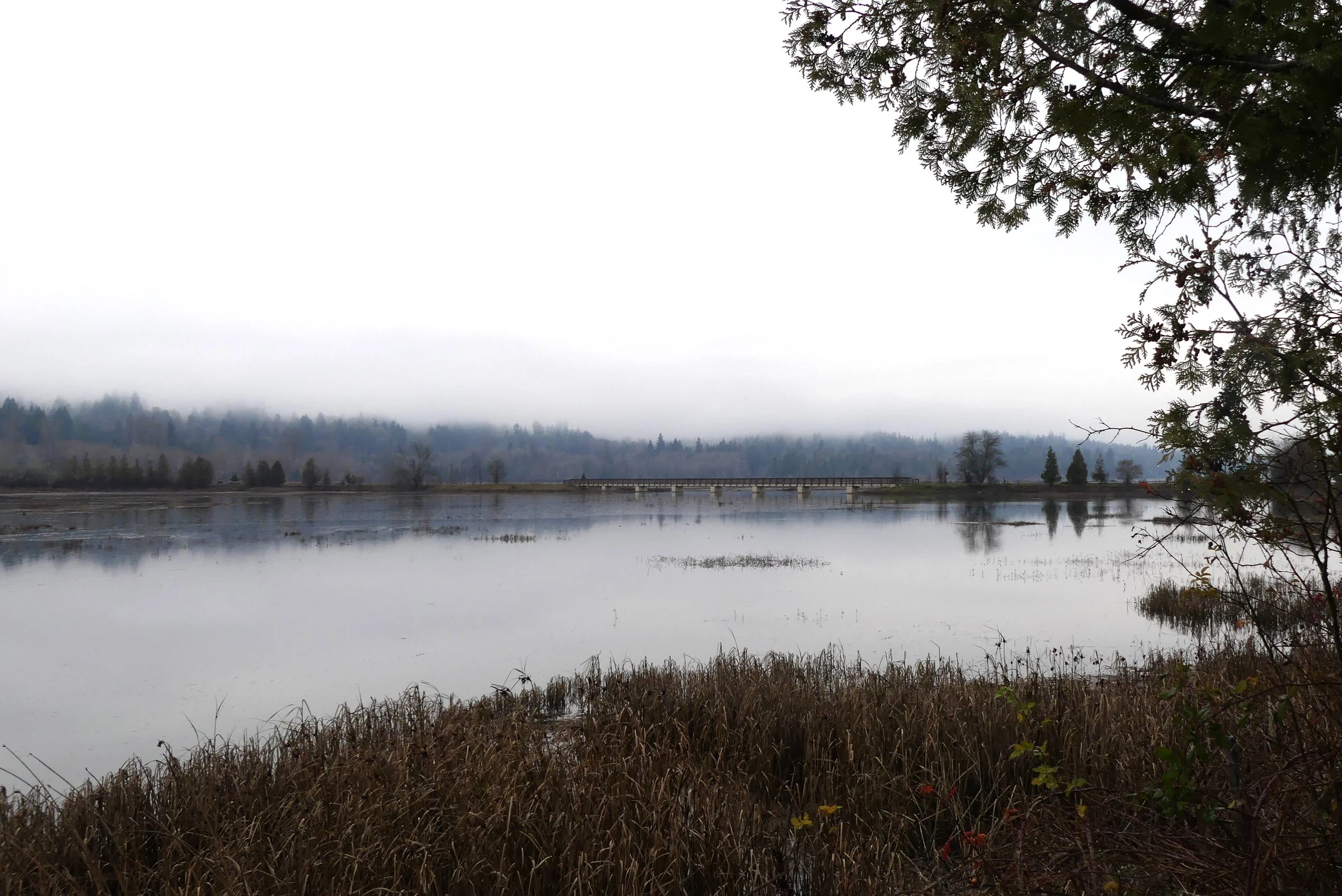
Water-logged Wetlands

An American Kestrel surveying the fields
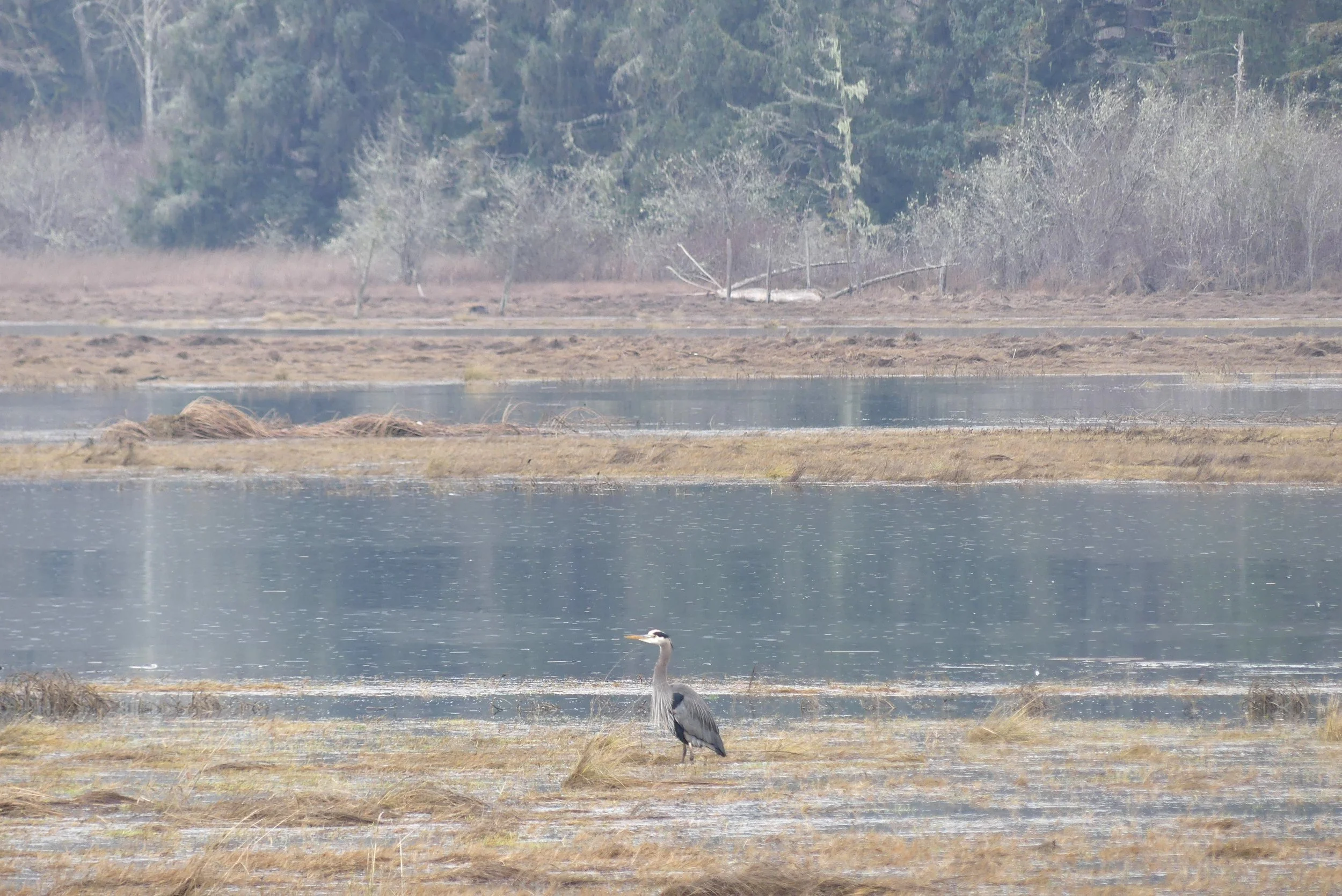
Great Blue Heron standing alone on the limited patches of grass
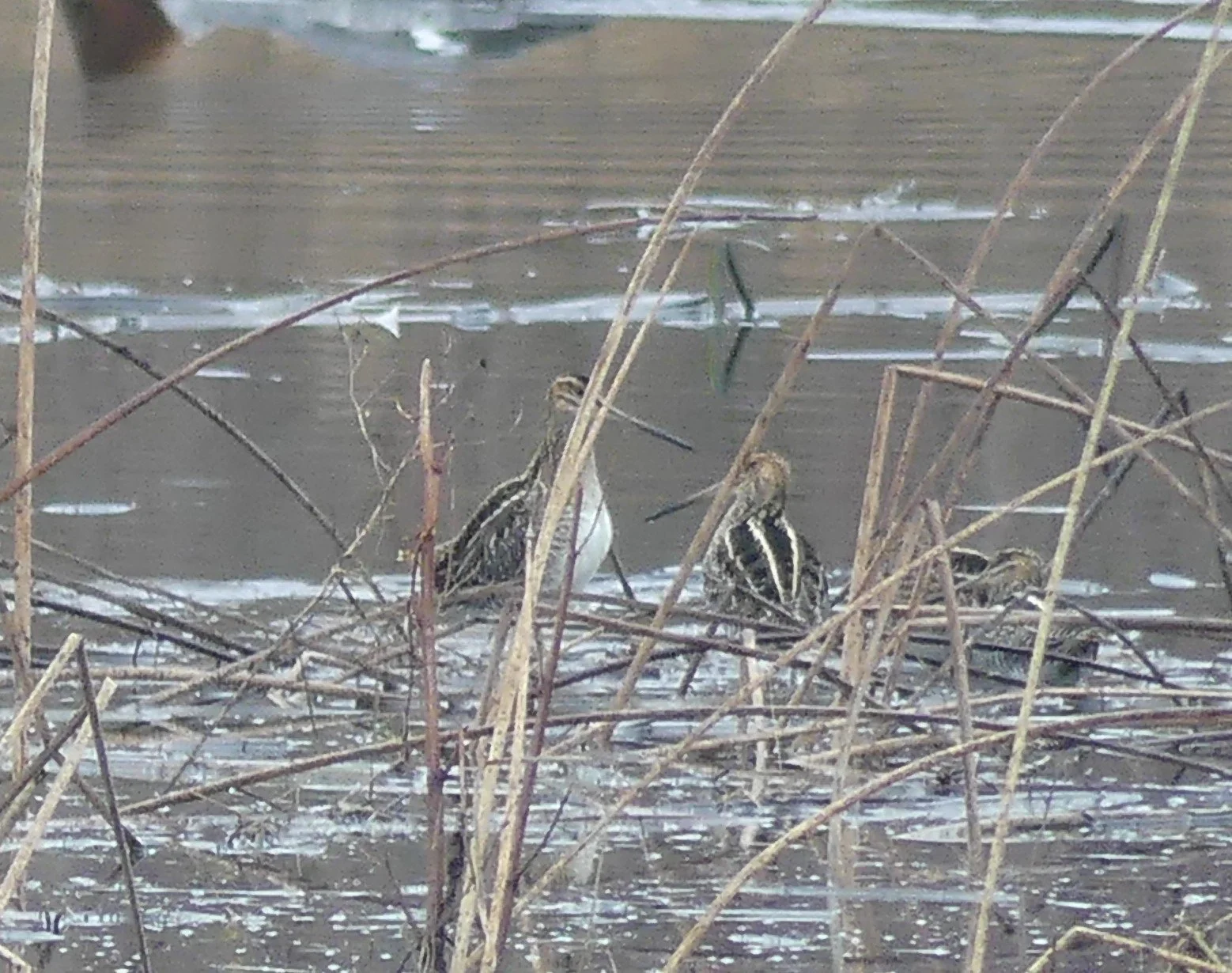
Wilson’s Snipes - camera zoomed to max for grainy photo but clear identification
