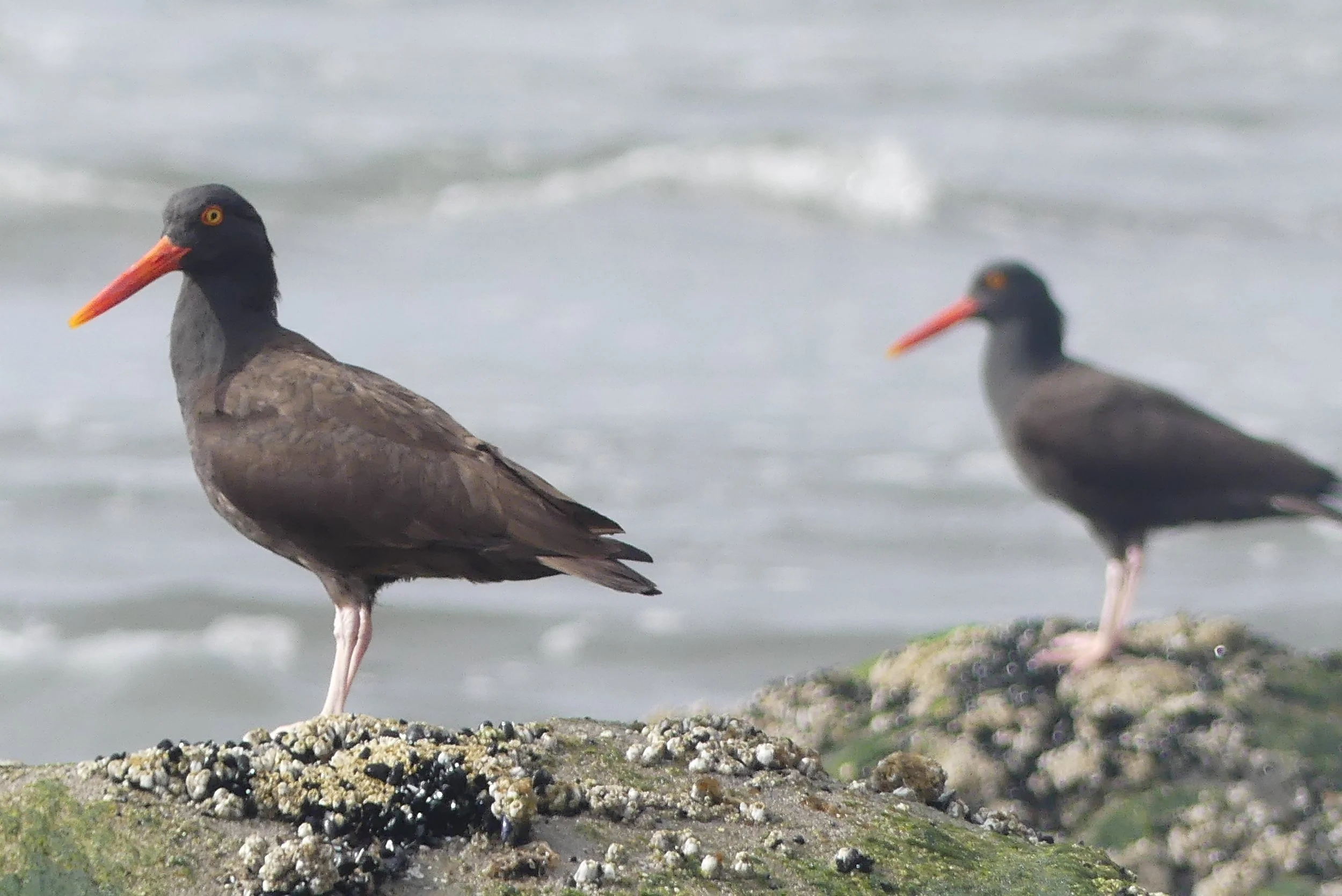
Day three started the same way as the morning before—with a walk down to where Kalaloch Creek empties into the Pacific near Kalaloch Lodge. The gulls were still gathered in large numbers along the shoreline, but this time they had company. Three Black Oystercatcher stood out immediately against the rocks and surf, their bright bills impossible to miss.
After climbing back up the bluff, my brother and I settled into a pair of lounge chairs overlooking the coast and simply watched the morning activity unfold around us. The swallows were the most obvious movement overhead. Barn Swallow were everywhere, mixed in with Violet-green Swallow weaving through the air.
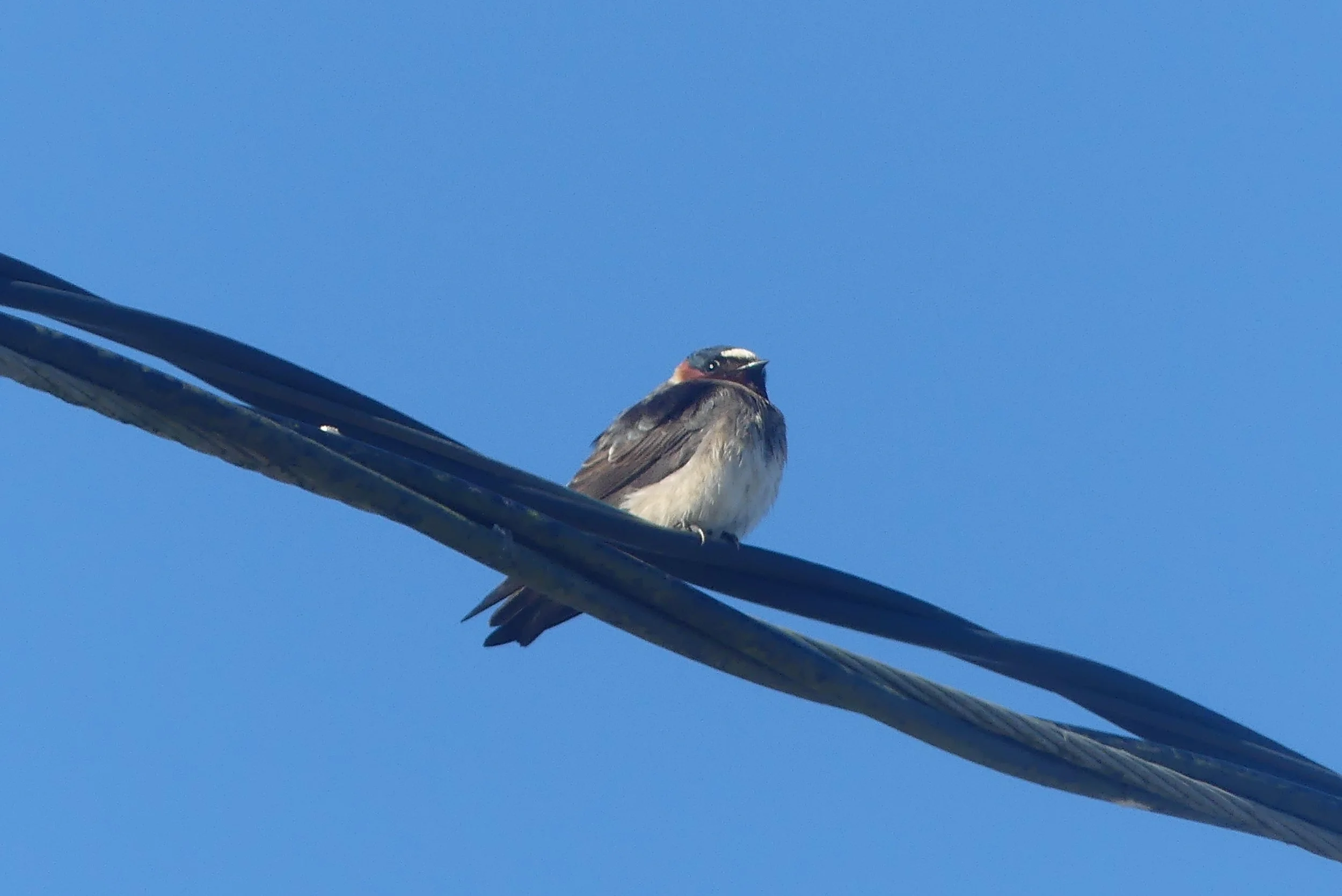
At one point, a different field mark caught my attention and I remember telling my brother, “I think that’s a Cliff Swallow.” A few moments later the view confirmed it—Cliff Swallow mixed into the group. It was one of those satisfying birding moments where recognition starts piecing itself together in real time.
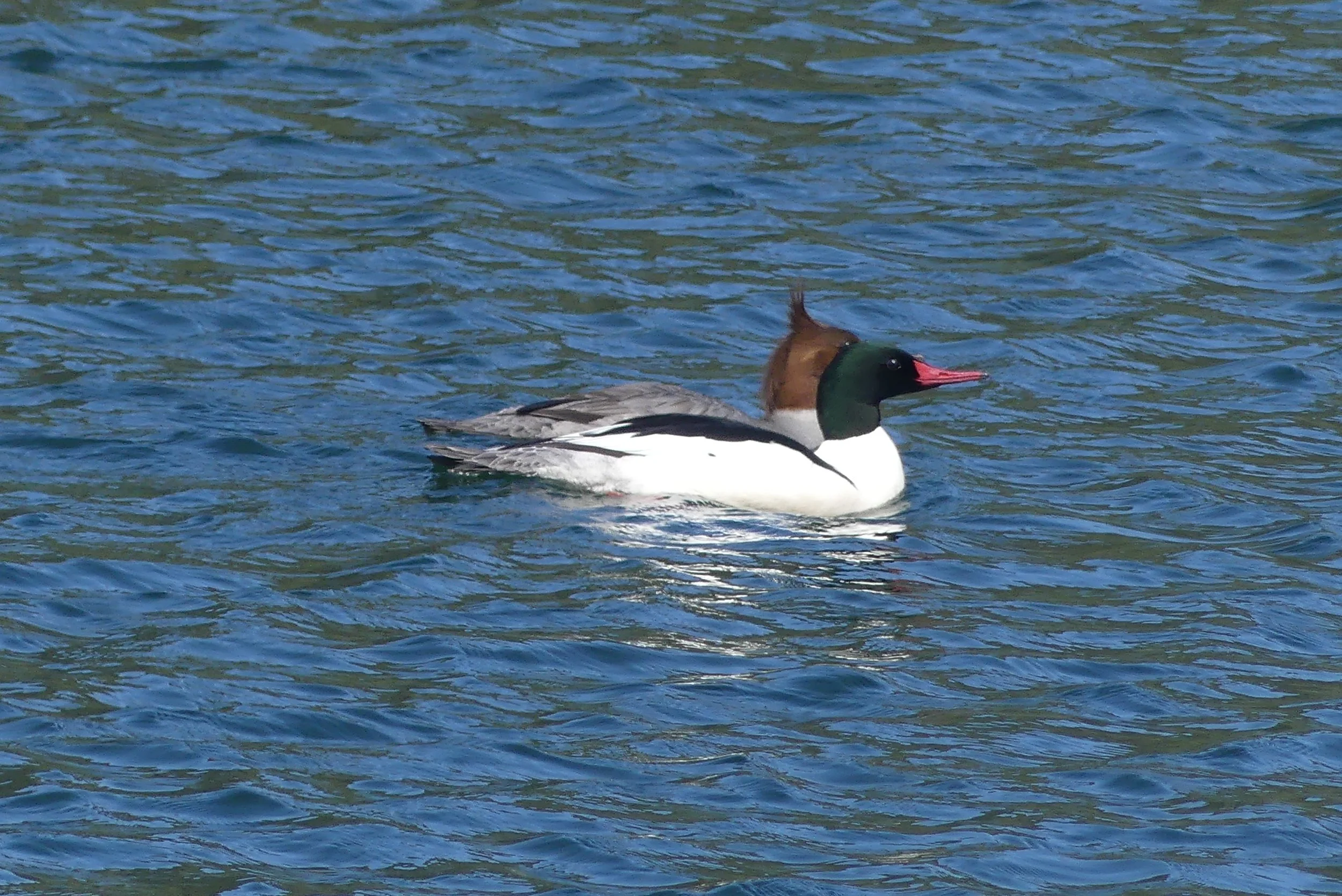
A Rufous Hummingbird perched close enough that binoculars weren’t even necessary. Nearby, Purple Finch, White-crowned Sparrow, Song Sparrow, and a Mourning Dove rounded out the quieter morning observations. Four Common Merganser also moved steadily up Kalaloch Creek as the morning progressed.
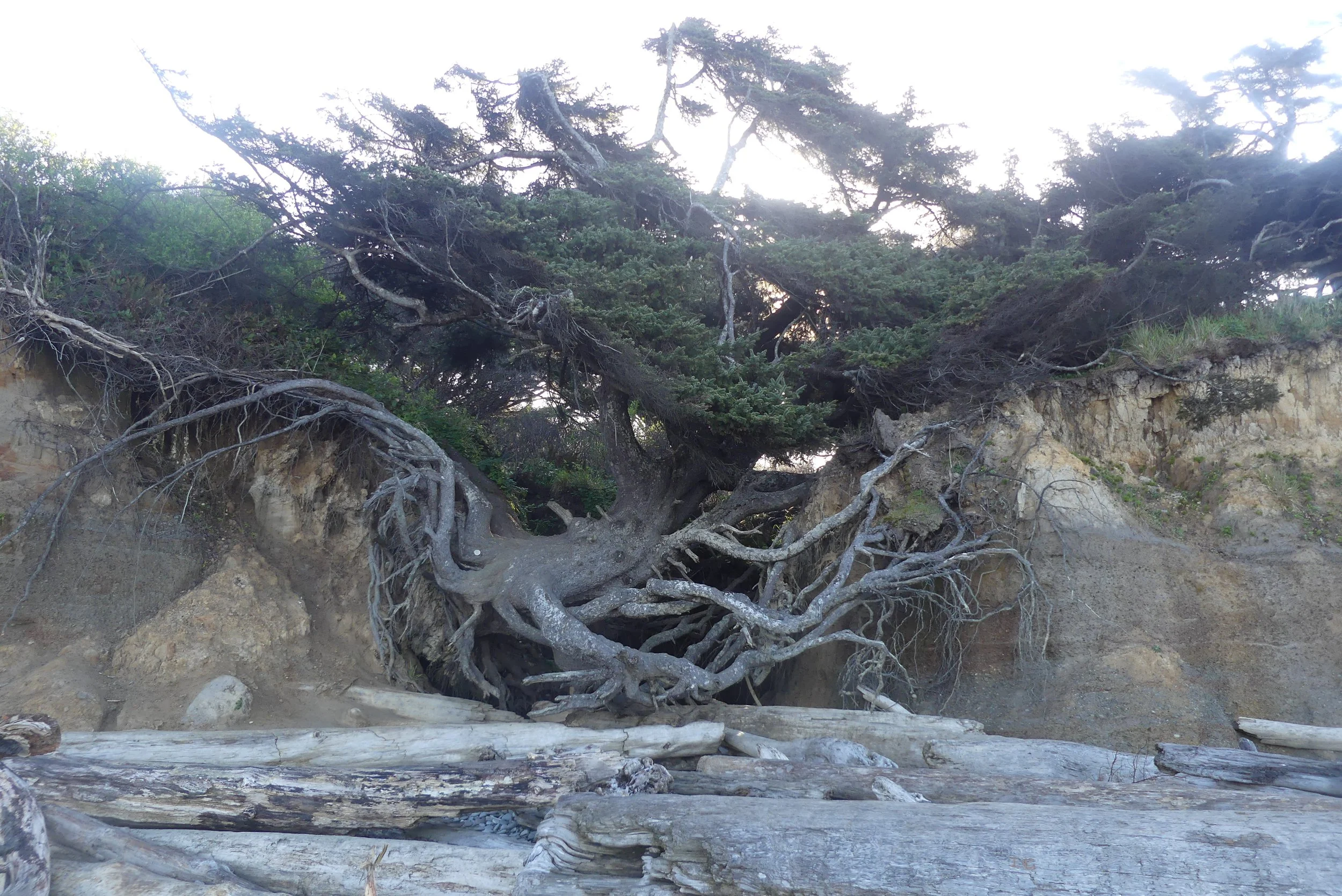
After taking in the morning bird activity, we packed up and headed toward Hoh Rain Forest with a quick stop at the Tree of Life along the way.
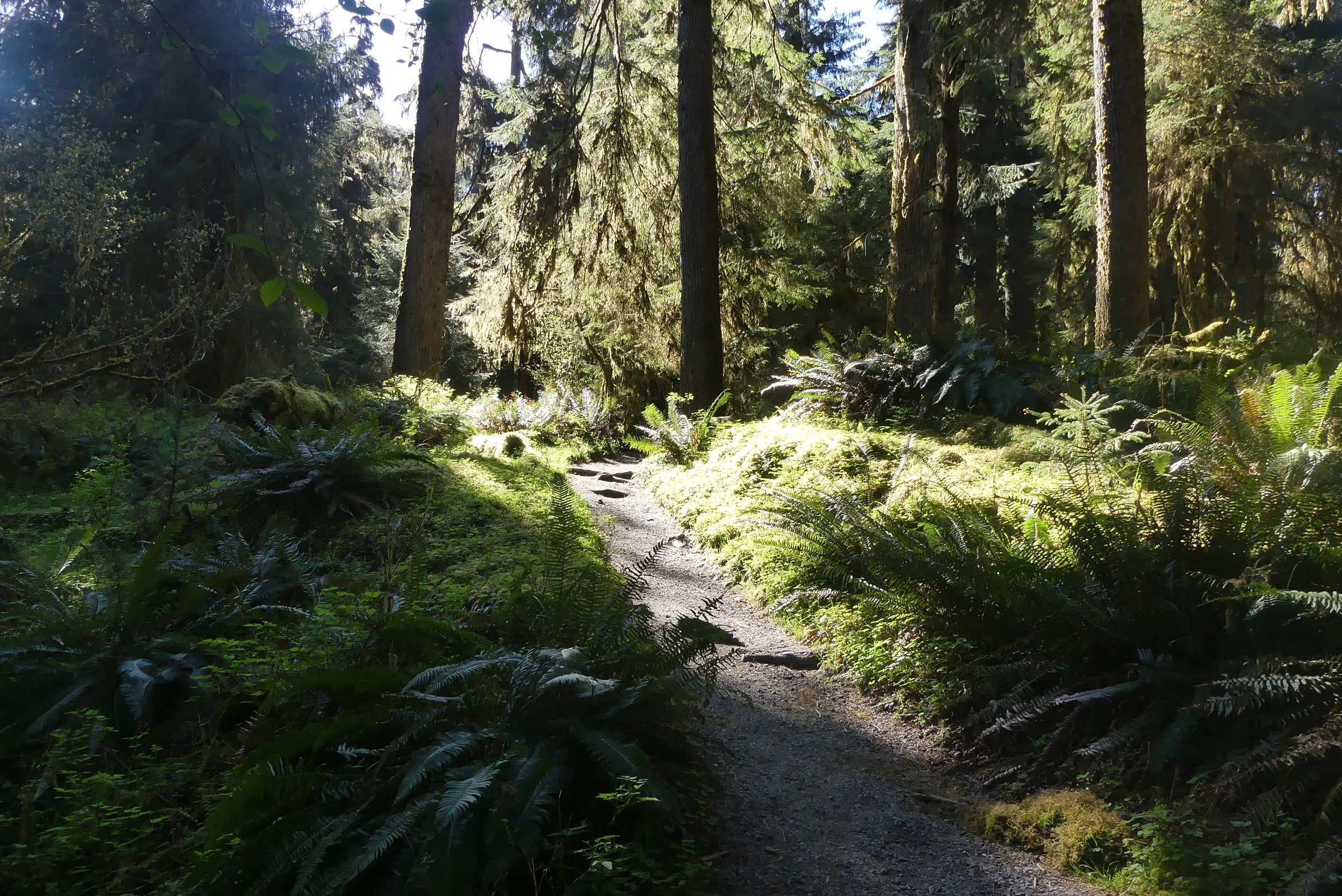
At the Hoh, we hiked both the Hall of Mosses Trail and the Spruce Nature Trail. Birding in dense rainforest always feels different to me than birding open habitat. The forest is alive with sound, but much of the activity stays hidden high in the canopy or buried deep in the vegetation.
The Pacific Wren were impossible to ignore, singing constantly through the forest. Several other species announced themselves only by sound. Despite spending extra time searching, the Hammond's Flycatcher remained heard but unseen. I nearly had the same outcome with a Black-throated Gray Warbler before finally catching a quick glimpse near the visitor center. As usual, a few chickadee seemed to appear no matter where we wandered.
On the drive out, a Wood Duck resting on one of the ponds gave us one final sighting before leaving the forest behind.
This stop felt less about chasing birds and more about taking in the habitat itself. The moss-covered trees, massive spruce, filtered light, and constant sound of water create a landscape that feels uniquely Pacific Northwest. Even when the birds are difficult to see, the forest still feels full of life.
After leaving the Hoh Rain Forest, we made a short stop at Rialto Beach to take in the coastline. The beaches along the Olympic coast all feel rugged, but Rialto somehow felt even more raw and exposed than the others we had visited so far.
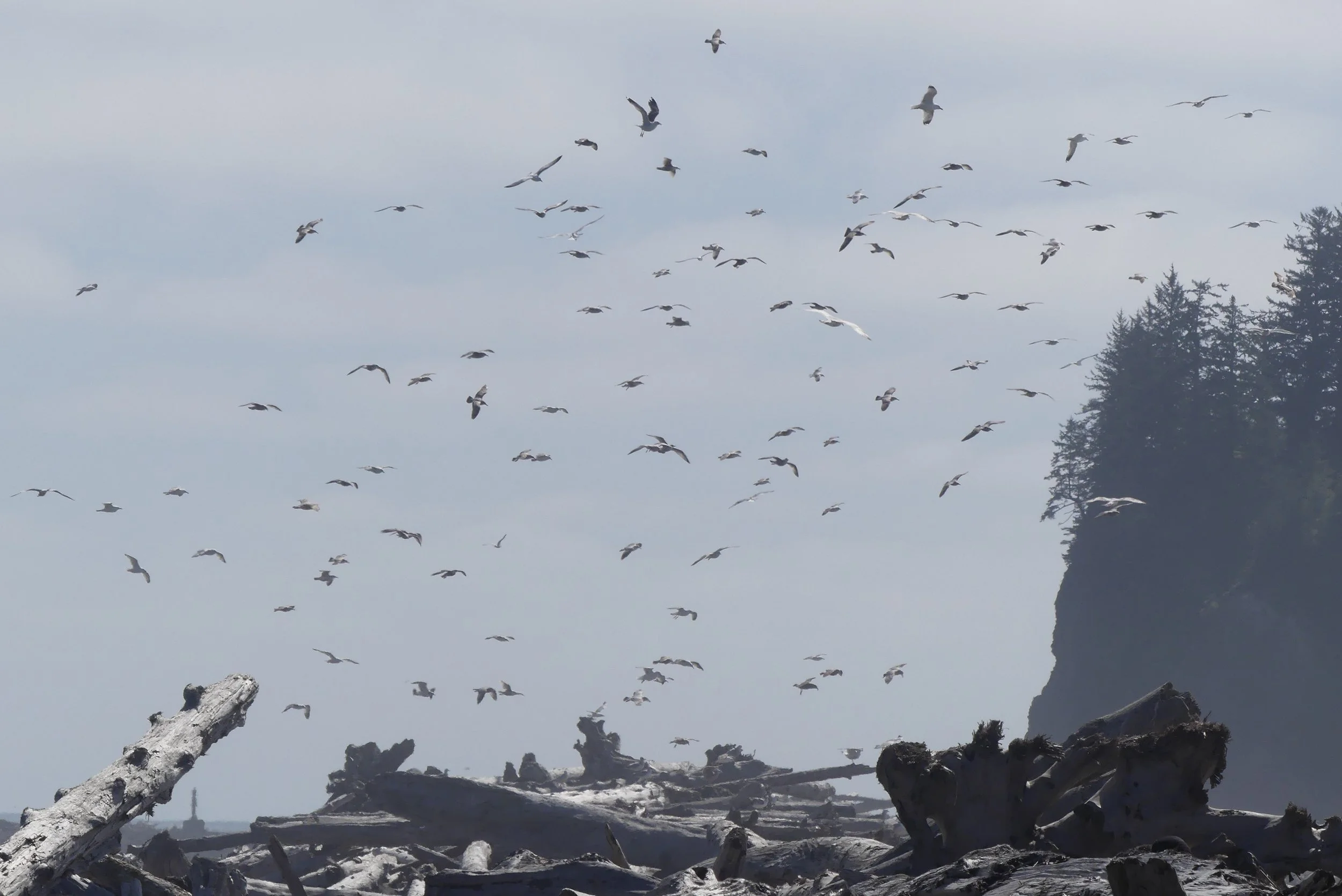
It wasn’t much of a birding stop, though the Quillayute River still held some activity. Common Merganser and Bufflehead moved along the water while eagle soared high overhead. Farther out, hundreds of gulls clustered together across the distant rock barrier, creating one of those scenes where bird activity becomes part of the larger coastal landscape rather than the main focus itself.
From there, we began the longest drive of the trip, making our way toward Neah Bay and Hobuck Beach. We ended up with several incredible sightings later that evening, but those deserve their own post tomorrow.
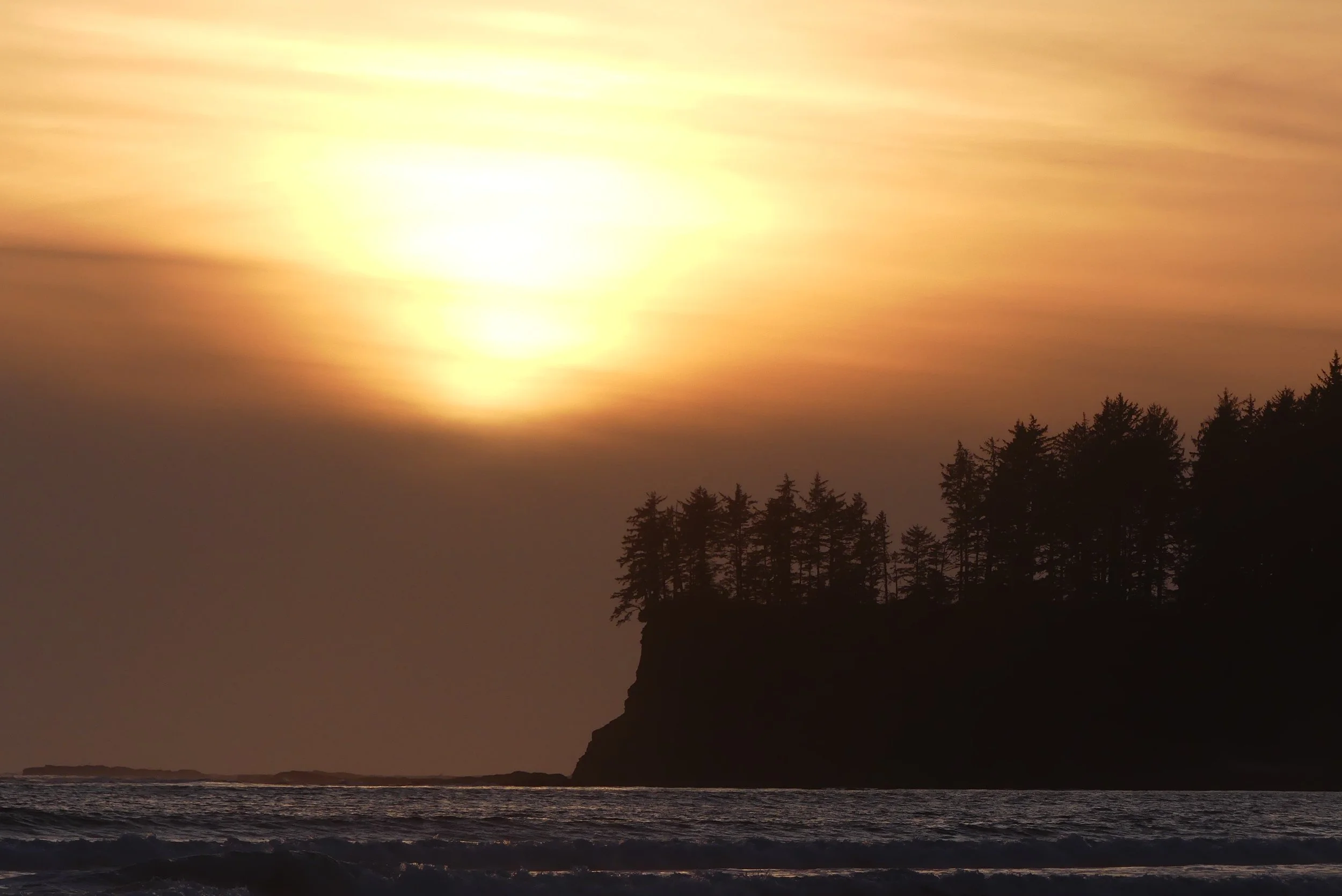
For now, I’ll end day three watching the sun disappear beyond the most northwestern edge of the lower 48.
Field Notes — Kalaloch
Location: Kalaloch, Washington, USA
Date: Late April 2026
Habitat: Coastal bluff, creek mouth, Pacific shoreline
Conditions: Cool coastal morning with light wind and mixed clouds
Species Observed (highlights):
Black Oystercatcher
Barn Swallow
Violet-green Swallow
Cliff Swallow
Rufous Hummingbird
Purple Finch
White-crowned Sparrow
Song Sparrow
Mourning Dove
Common Merganser
Other Observations: Excellent opportunity to compare swallow species in active flight; morning observation from the bluff allowed extended viewing without actively searching.
Field Notes — Hoh Rain Forest
Location: Hoh Rain Forest, Olympic National Park, Washington, USA
Date: Late April 2026
Habitat: Temperate rainforest with dense conifer canopy, moss-covered understory, and riparian forest
Conditions: Cool, damp forest conditions with filtered sunlight beneath the canopy
Species Observed (highlights):
Pacific Wren
Hammond's Flycatcher (heard only)
Black-throated Gray Warbler
Chickadees
Wood Duck
Other Observations: Bird activity was more often heard than seen; habitat itself became the primary experience, emphasizing the scale and complexity of Pacific Northwest rainforest ecosystems.
Enjoyed this field note?
Subscribe below for occasional observations and reflections from The Perch & The Path.