Togetherness at Nisqually
This past Saturday, I spent a few cold, breezy hours at the Nisqually Wildlife Refuge with my children. The weather was unremarkable in the way winter often is — stiff fingers, layered jackets, and a steady wind that kept us moving — but the time itself felt rare.
What struck me first wasn’t a bird at all. It was watching my kids take turns with my camera, quietly debating angles, light, and whether a photo was “good enough.” As they’ve gotten older, our interests have drifted in different directions, so seeing them slow down, notice details, and talk about birds, nature, and life — with me and with each other — was a genuine gift. It felt like shared ground I wasn’t sure we still had.
One of our first sightings was a Northern Shoveler. I remember the first one I ever saw, years ago in Illinois, and now they’re an easy identification for me. That long, oversized bill jumps out immediately. But standing there with my family, I was reminded that what feels obvious to me now is still brand new to others. The shoveler became a small lesson in humility — expertise, such as it is, is really just accumulated familiarity.
Nisqually was alive with eagles that day, especially juveniles. And even as a somewhat experienced birder, I was caught off guard by their size. They seemed enormous — so much so that I briefly wondered if I was looking at golden eagles instead of bald eagles. At one point, a large juvenile passed overhead, close enough that I instinctively reached up, half-joking, as if for a high-five.
Later at home, curiosity got the better of me. Do eagles get smaller as they age? The answer, unsurprisingly, is no. Juvenile bald eagles often appear larger because their darker plumage lacks the crisp contrast of adult birds, making them look bulkier in flight. Their longer-looking wings and less defined head shape can exaggerate that impression, especially when seen up close. It was a good reminder that perception is not always precision — even after years of watching.
As we continued along the trails, a flock of ducks flew overhead, and I tried to identify them on the wing. It was then that I noticed it — the narrow, elegant tail that gives the Northern Pintail its name. I’ve seen pintails many times, but until that moment, the tail had never truly registered. I tend to focus on color, size, or the most obvious markers. That small realization landed quietly: bird identification has layers, and I’m still working through them.
Days like this remind me that learning doesn’t move in a straight line. Sometimes progress looks like teaching. Sometimes it looks like realizing how much more there is to notice. And sometimes, it looks like standing in the cold, watching your children discover something you thought you already knew.
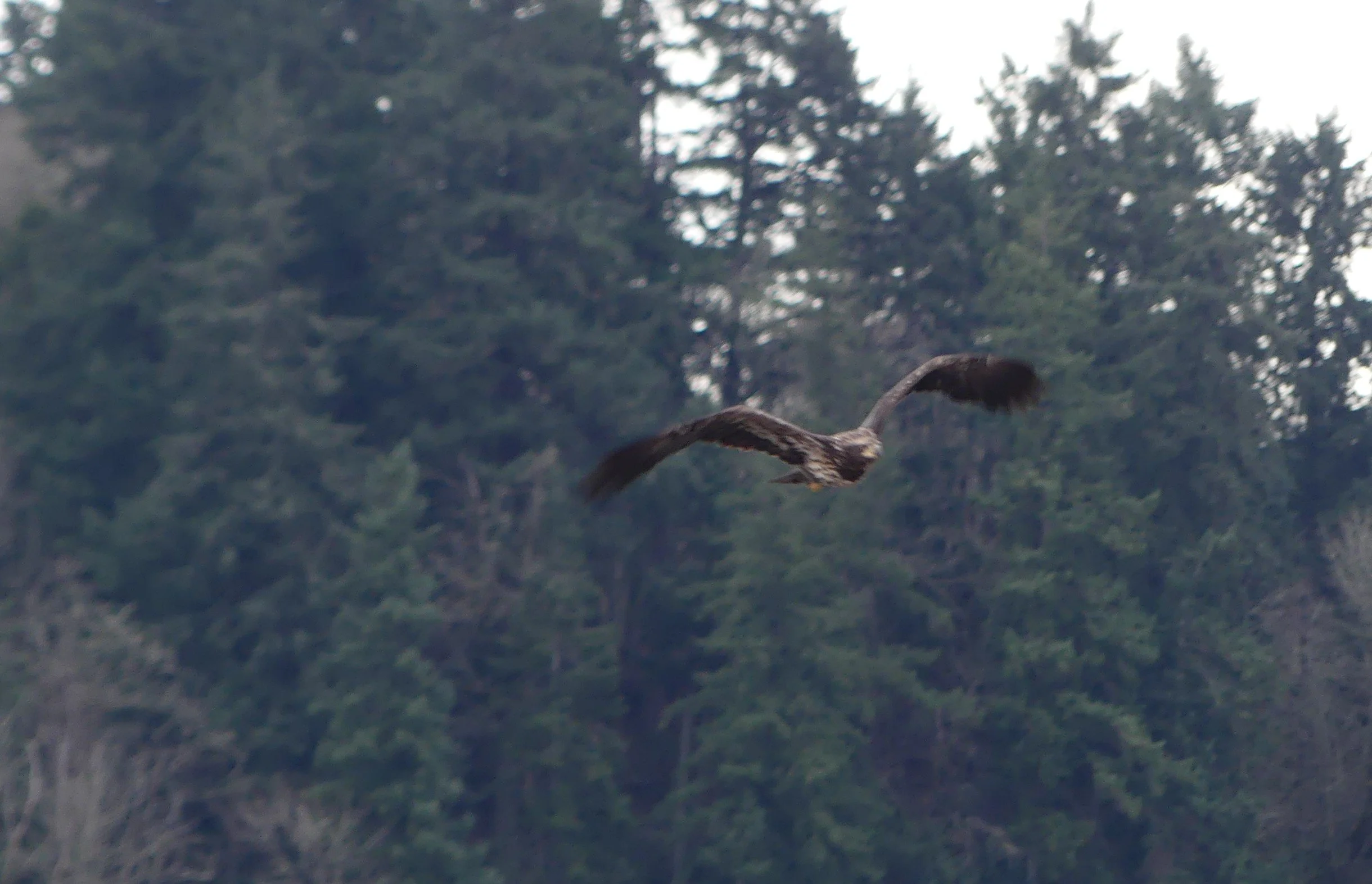
Juvenile Eagle soaring through the reserve
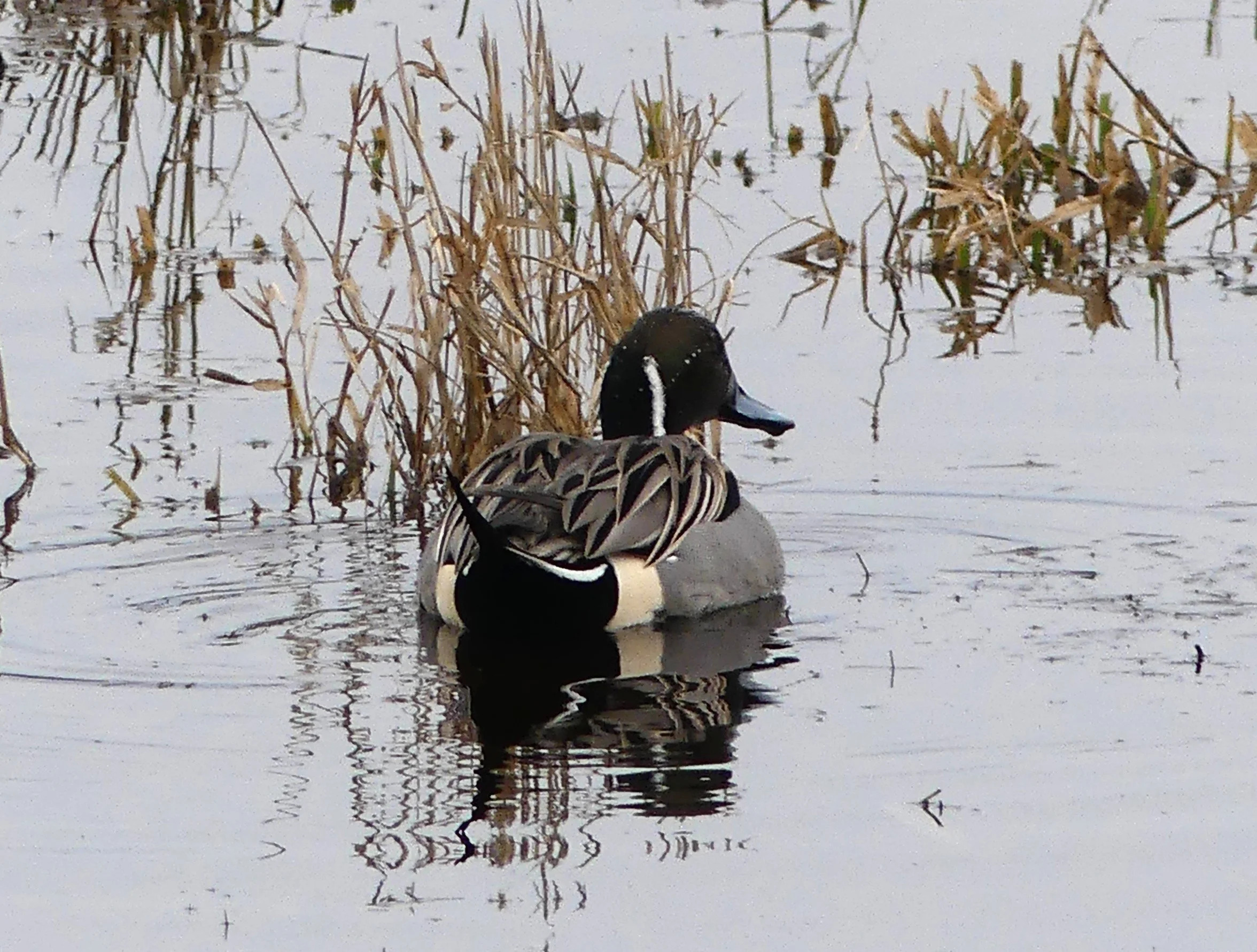
The “Pin-trail” of the Northern Pintail.
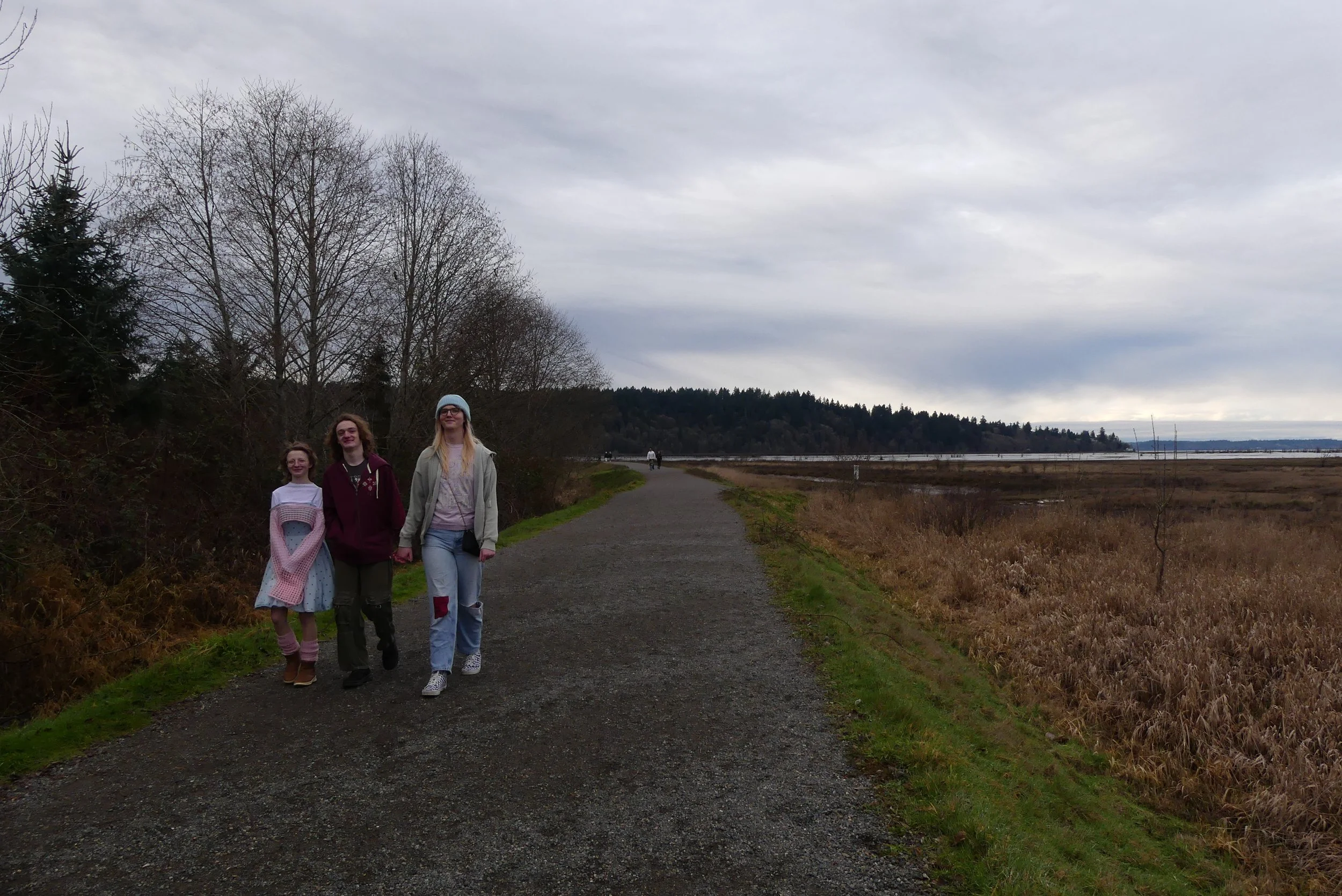
Cat, Rosa, & Rosemary - my birding partners for the day.
