Leading Without Needing All the Answers
By the fourth time leading a Kitsap Audubon walk, something had shifted. The early apprehension—the quiet worry that I wasn’t expert enough, that someone might ask a question I couldn’t answer—had mostly faded. In its place was something steadier: the pleasure of familiar faces, of greeting people by name, of stepping off together knowing that whatever we encountered would be enough. I’ve come to realize that leading a walk isn’t about having all the answers. It’s about creating space for curiosity to surface and letting the collective knowledge of the group do what it always does—fill in the gaps.
This time, I asked three others to co-lead alongside me. I recognized the same nervous energy in them that I once carried myself—the brief hesitation before the first bird is spotted, before the group settles into its rhythm. And just like before, it dissolved almost immediately. Once the walk began, the focus shifted away from who was leading and toward what we were observing. Birds took center stage. Conversations flowed. Identifications came from all directions. Experience layered itself naturally, without hierarchy.
That’s ultimately my hope for the Kitsap Audubon Society: to reach people who love birds but feel like imposters, who think enthusiasm alone isn’t enough. It is. Enthusiasm opens the door; learning follows. On this walk, that shared energy carried us through sightings of Greater Scaup gathered tightly near the marina, Horned Grebes diving like darts straight into the dark water below, and Black Turnstones arriving in tight, weaving formation before landing just thirty feet from us. Pelagic Cormorants perched nearby, their iridescence catching the winter light, while goldeneyes, buffleheads, and a steady patrol by a Belted Kingfisher rounded out the morning.
Walking away, I was reminded again that leadership in this space isn’t about expertise—it’s about invitation. The birds do the rest.
Location: Port Orchard Waterfront
Date: Mid-winter
Habitat: Nearshore marine waters and protected inlet along the Puget Sound coastline
Conditions: Cool, calm conditions with good visibility across the bay
Species observed
Diving ducks and waterfowl
• Greater Scaup
• Common Goldeneye
• Barrow’s Goldeneye
• American Wigeon
Diving birds
• Common Merganser
• Red-breasted Merganser
• Horned Grebe
Seabirds
• Pelagic Cormorant
Other observations
• Several groups of diving ducks rafting together offshorey
• Common and Barrow’s Goldeneye offering a good opportunity to compare head shape and plumage patterns
• Pelagic Cormorants 20 feet across docks showing vibrant colors that several observers felt the need to comment on
• Horned Grebes moving quietly through the nearshore waters, occasionally disappearing in quick dives
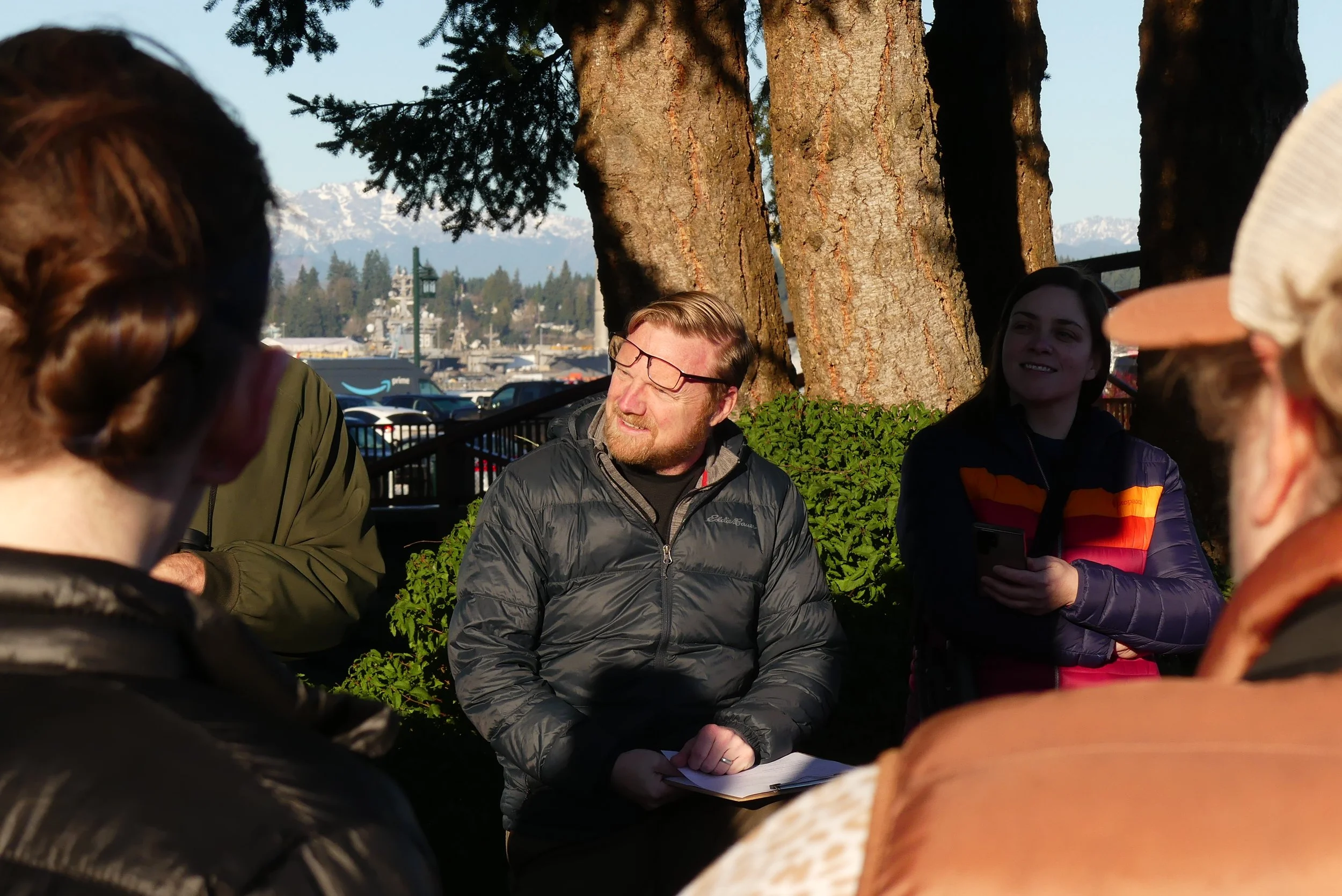
Me getting the group started
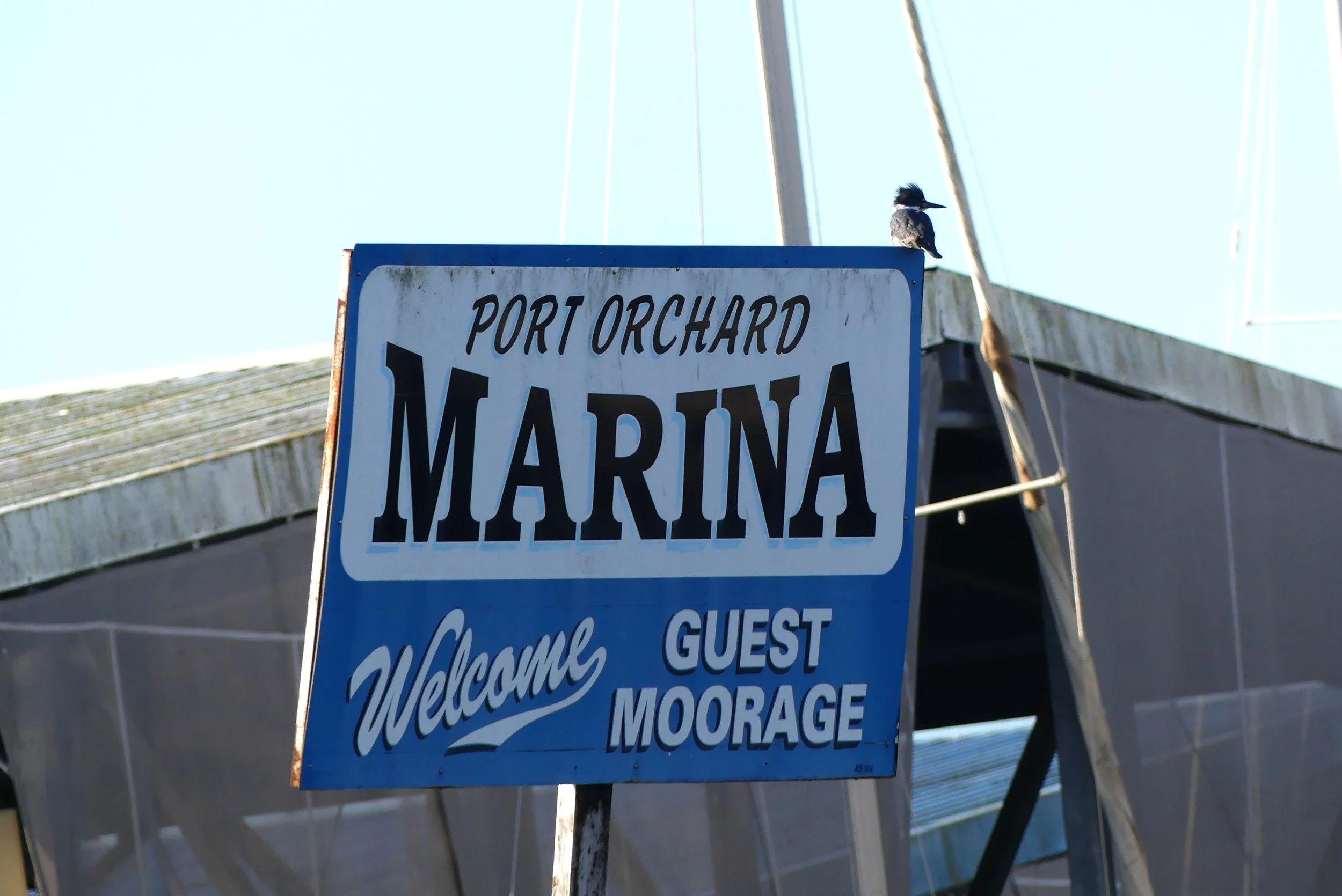
Belted Kingfisher on the Marina Welcome Sign
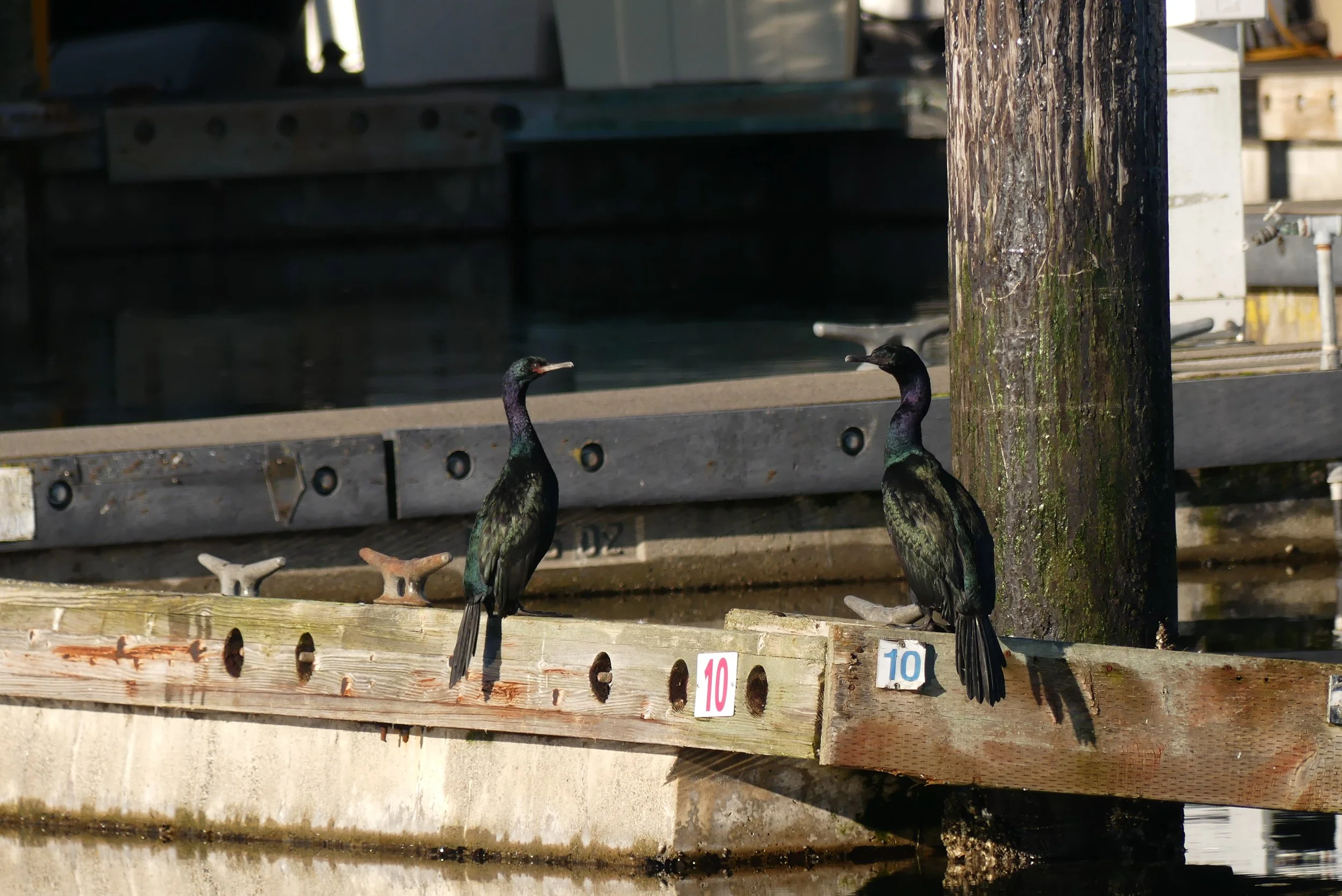
Shimmering colors on Pelagic Cormorants
