Ten Feet from the Tide Line
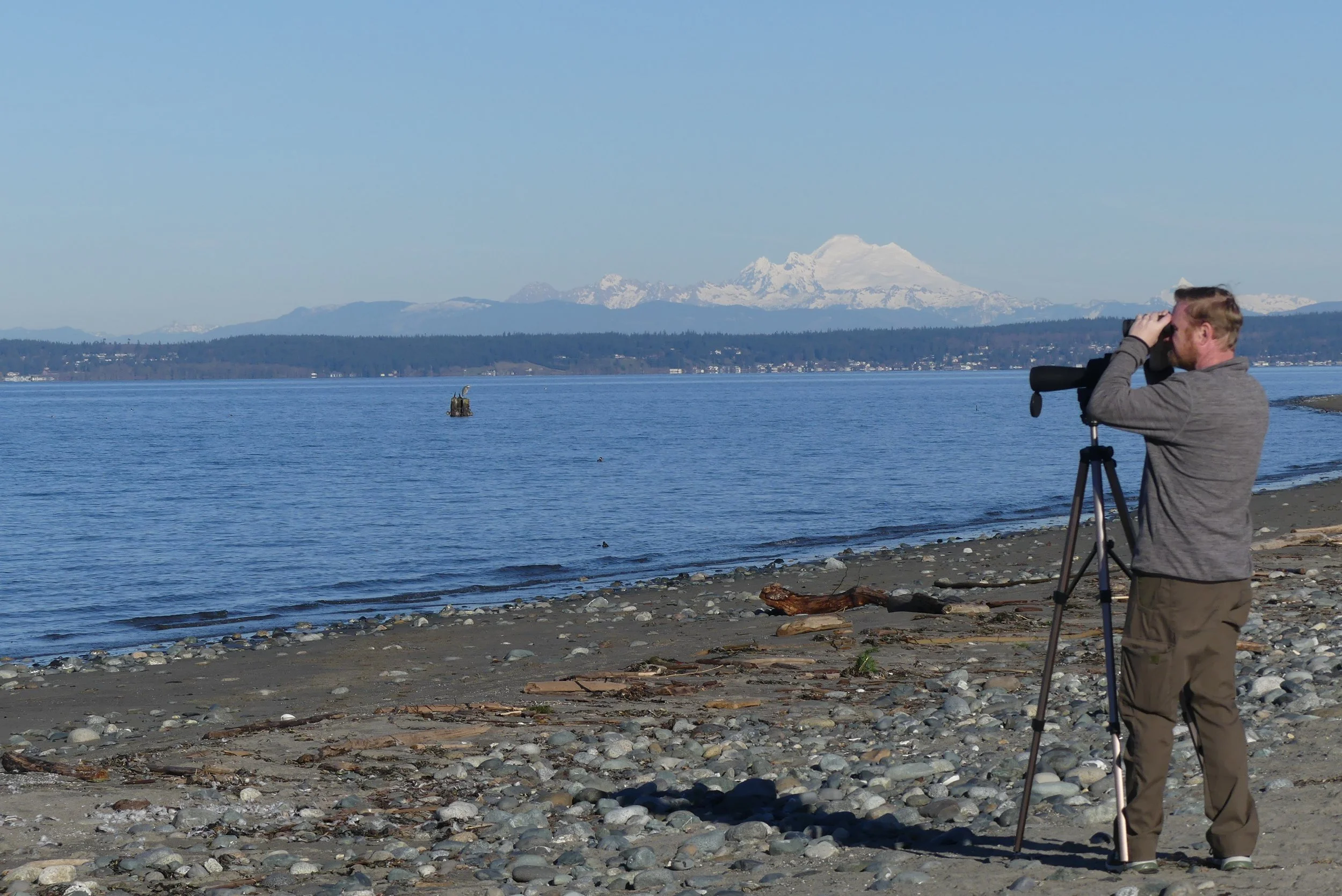
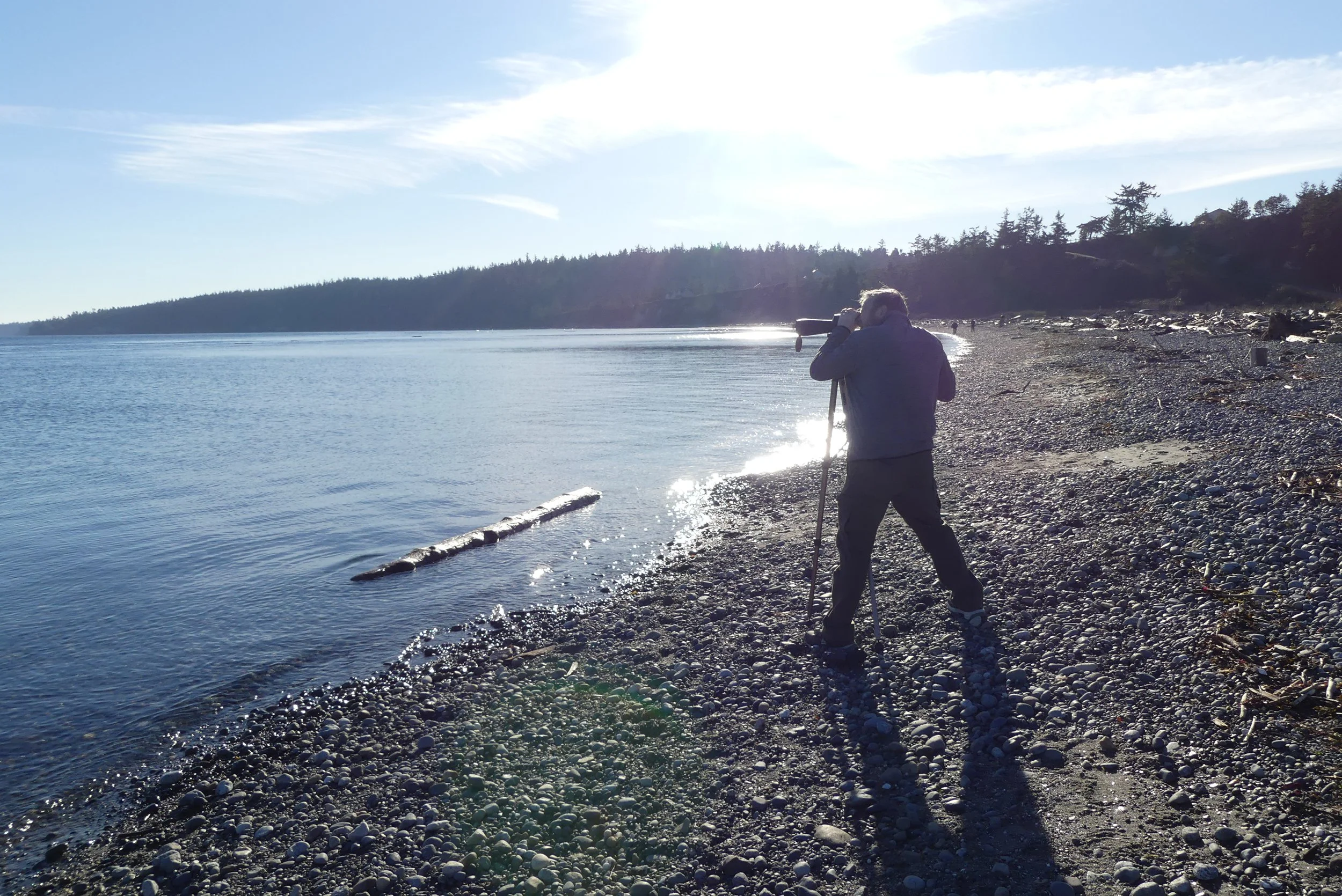
On MLK Day, my wife and I stepped outside our usual range and made our way to Marrowstone Island and Fort Flagler State Park. When I bird alone, I’m often juggling binoculars and camera, straps crossed, attention split. Lately, though, I’ve felt a pull to stay longer in the binoculars and let the camera matter less. My wife happily took on the role of photographer, which freed me to keep my eyes up and, for this trip, spend time behind a borrowed spotting scope as well.
A visit to Fort Flagler is, at its heart, a shorebird visit. Other birds are present, but the shoreline is the draw. Unlike many places where shorebirds flush at the slightest approach, the narrow spit here—only twenty or thirty feet wide—limits how far they can go. They tolerated our presence easily, sometimes allowing us within ten feet. That closeness changed everything. It made the fine details visible: the subtle colors, the shapes of bills, the proportions that are so easy to miss at a distance. It also allowed time to watch behavior—how they fed, rested, and moved among one another.
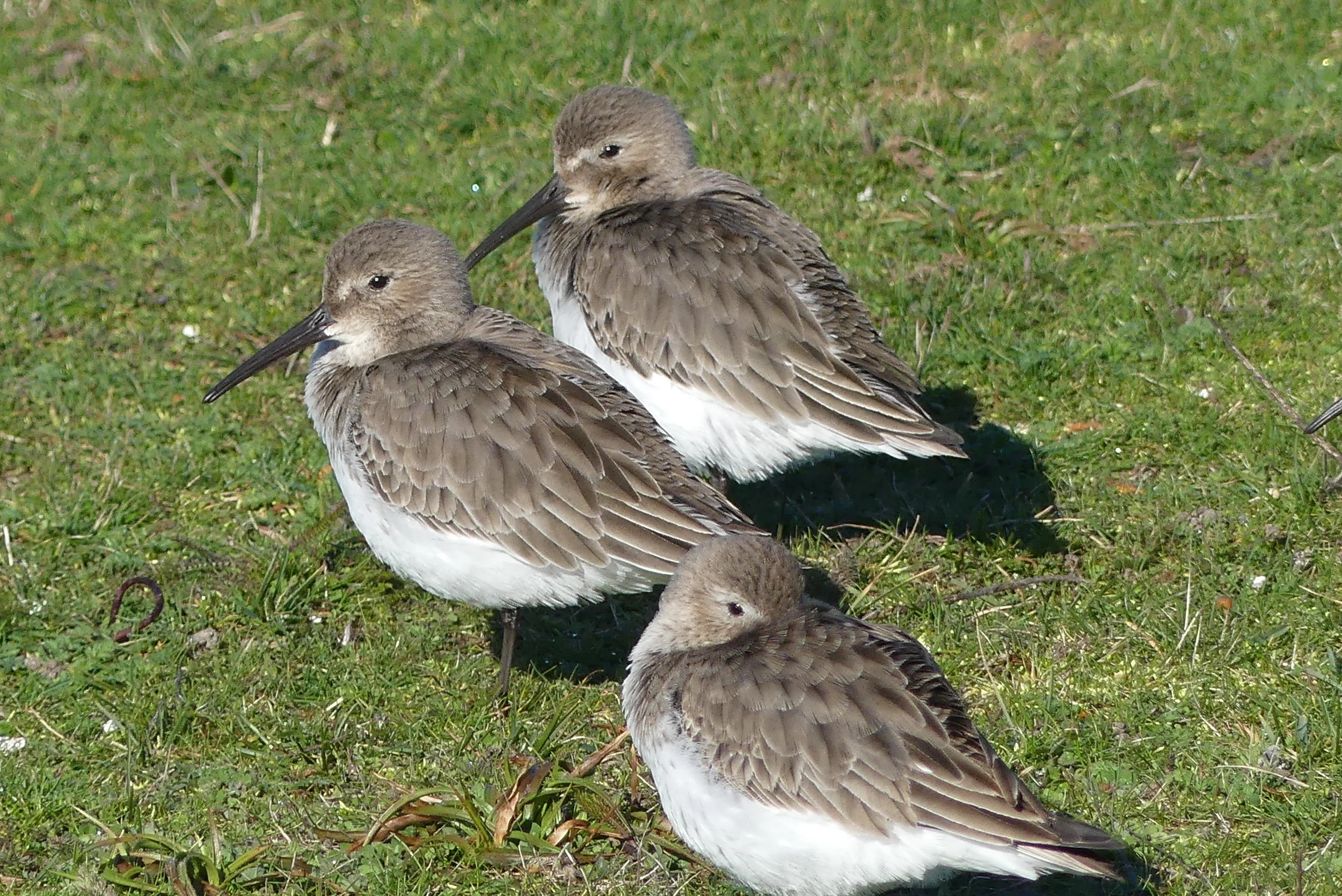
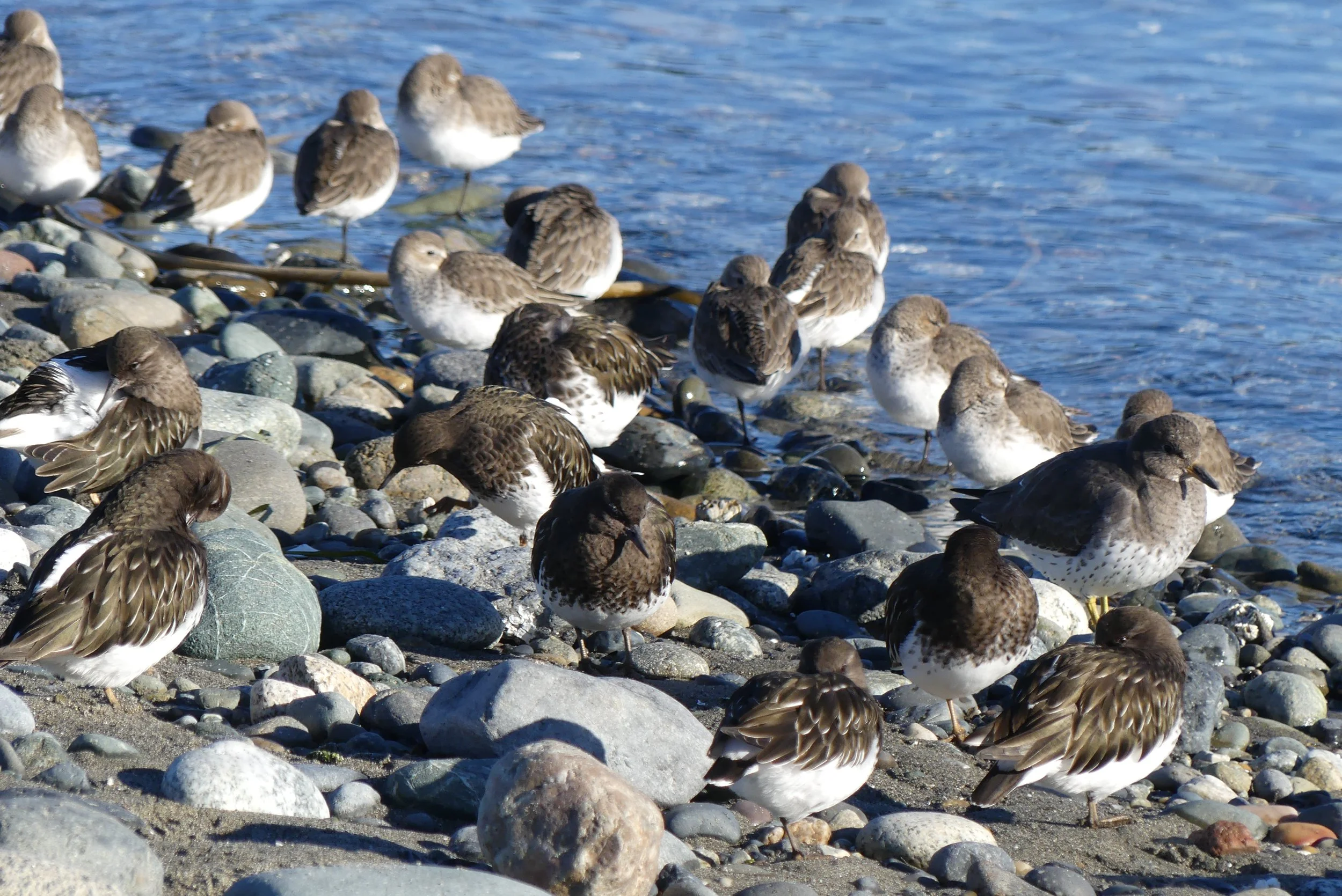
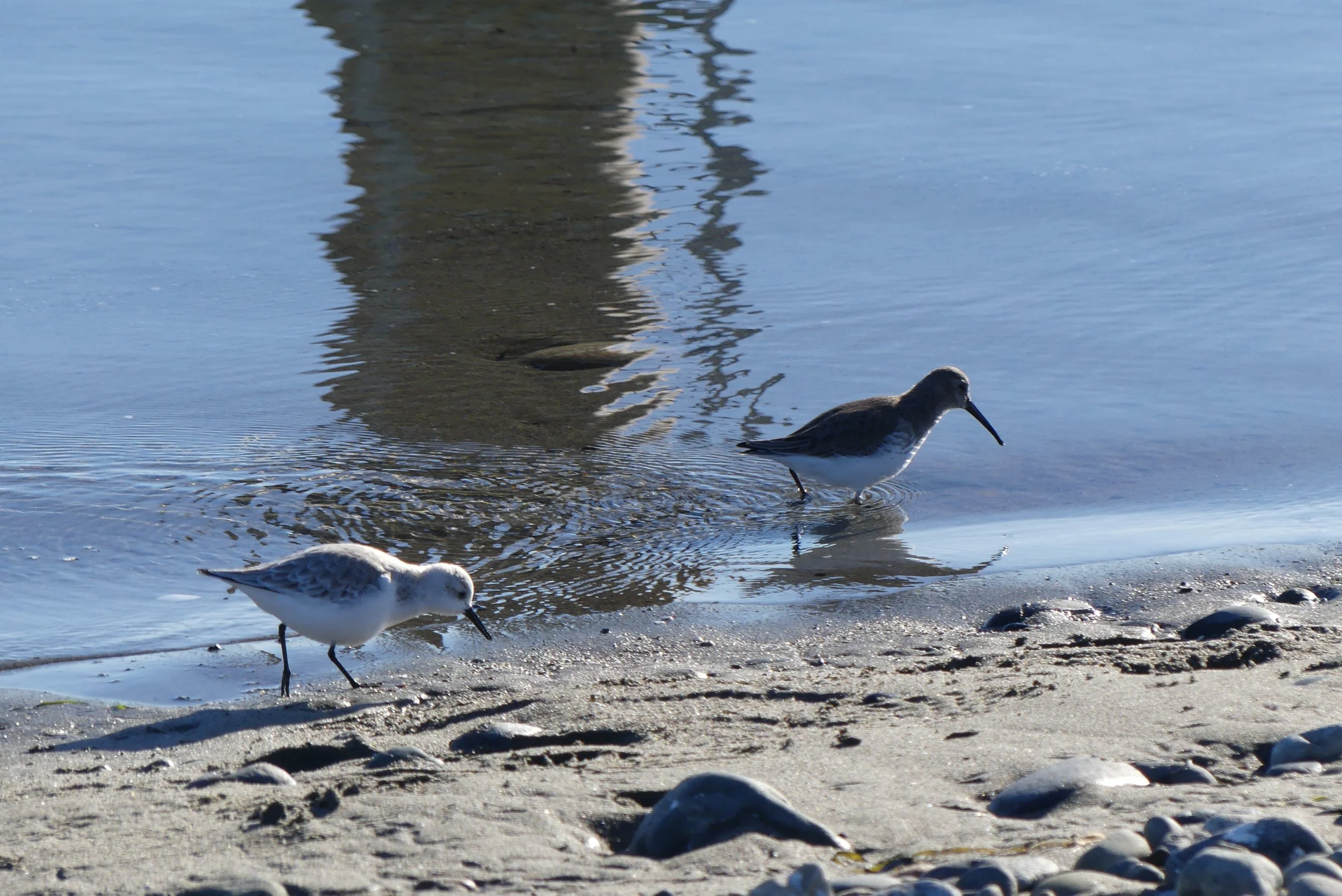
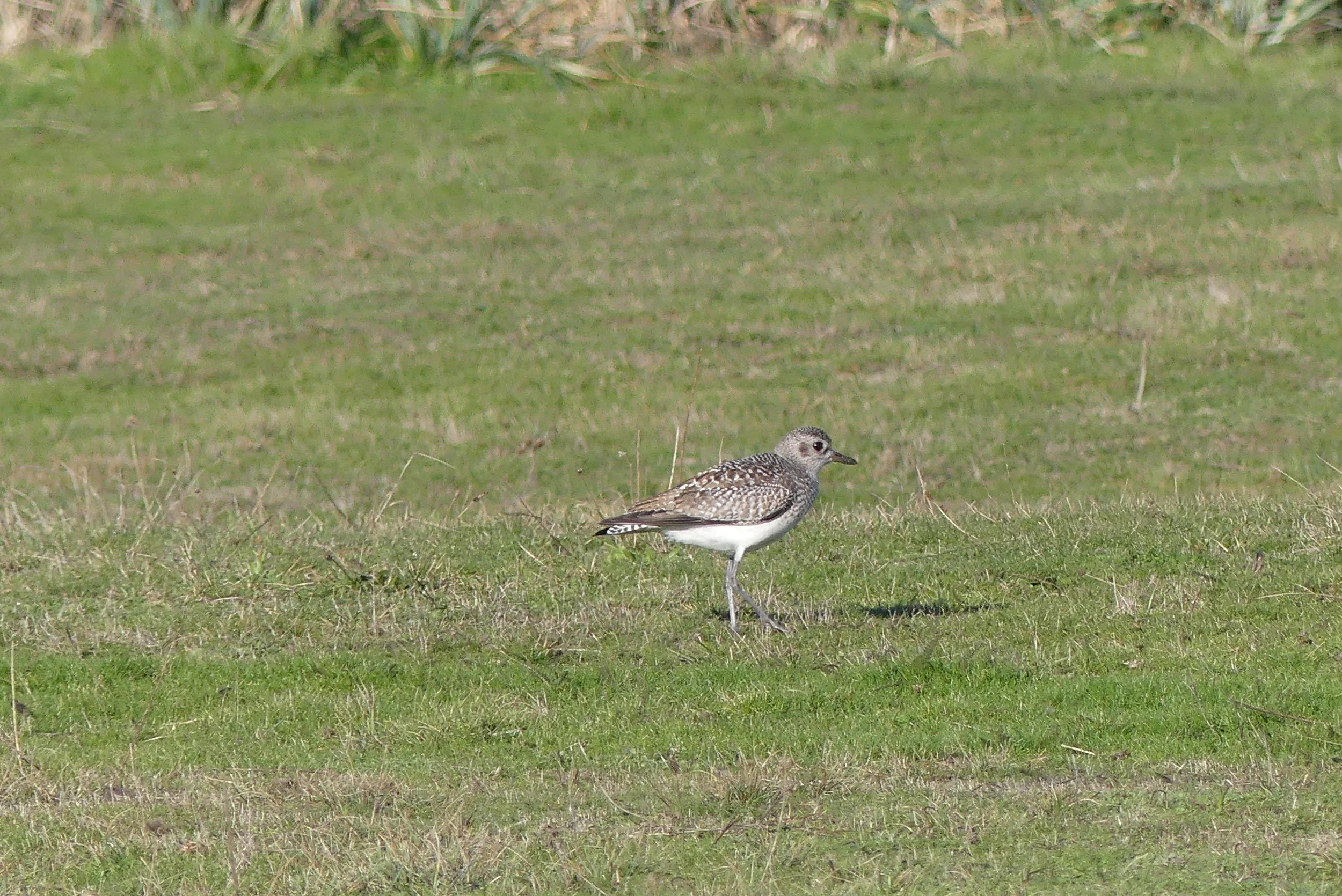
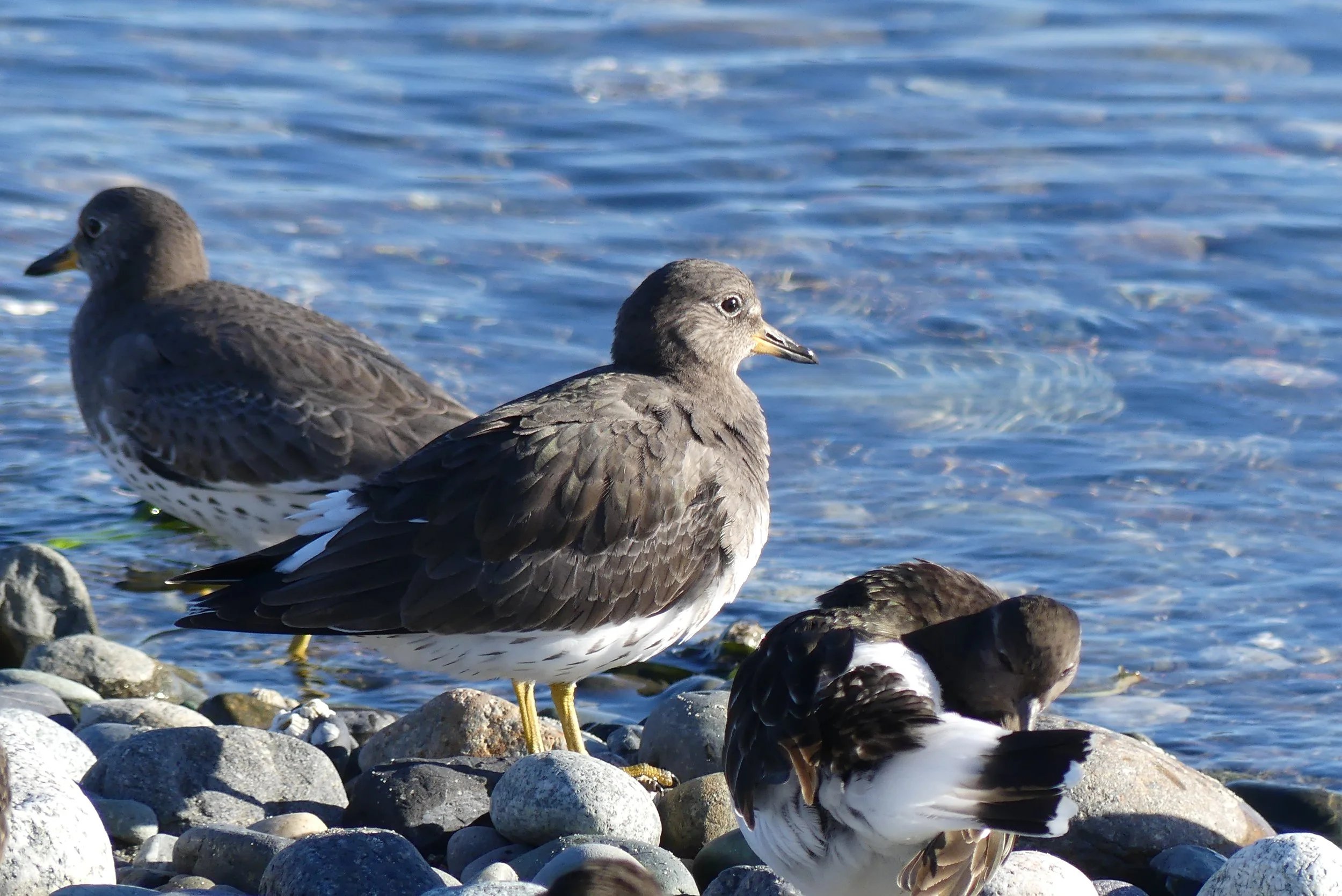
Sanderlings, Dunlins, Black Turnstones, and Surfbirds worked the shoreline together in loose, shifting groups, while Black-bellied Plovers stayed nearby but largely apart, preferring the fields. On my first visit to Flagler years ago, a trip leader pointed out a single Surfbird hidden among hundreds of more familiar shorebirds. This time, it was my turn to find them myself. They made it easy—at least fifteen were present. Similar in size to the turnstones, but grayer overall, with spotted bellies, they stood out clearly once I knew where to look. Watching these species side by side reinforced how comparison is often the best teacher.Shorebirds have long been a challenge for me—not because they’re especially difficult to identify, but because encounters are infrequent and details fade between sightings. Being this close, with multiple species together, helped fix those details in memory. The bright white of the Sanderlings paired with their thicker dark bills. The Dunlins’ gray backs, white undersides, and long, gently down-curved bills. The familiarity of Black Turnstones, which I see more regularly closer to home. And now Surfbirds, easier to recall with their short yellow bills tipped in black, bright yellow legs, and spotted bellies—spots that reminded me of the Spotted Sandpipers I see only occasionally.
The spotting scope added another layer entirely. I don’t own one, and I’m still very much a novice when it comes to seabird identification, but the scope slowed everything down. It made relative size differences between cormorant species clearer. It revealed how loons, grebes, mergansers, and goldeneyes sit differently on the water. Patterns of black and white on scoters, buffleheads, and goldeneyes became more readable. Even birds far out in the bay, moving fast in flight, held their shape long enough to study. I suspect a few murrelets passed through—an impression I’ll hold lightly, but one made possible only by time at the scope.
Fort Flagler offered more than a checklist that day. It offered proximity, patience, and repetition—the quiet ingredients that turn fleeting sightings into something remembered. This is the kind of birding that stays with you, not because it’s rare or dramatic, but because it allows you to really see.
Field Notes
Location: Fort Flagler State Park, Marrowstone Island
Date: MLK Day, January
Habitat: Narrow Puget Sound shoreline with tidal flats and rocky spit
Conditions: Calm winter afternoon
Species observed
Shorebirds
• Sanderling
• Dunlin
• Black Turnstone
• Surfbird
• Black-bellied Plover
Waterbirds
• Common Goldeneye
• Bufflehead
• Merganser
• Grebe
• Scoter
• Possible Murrelet
Other observations
• Shorebirds feeding very close to the tide line, sometimes within ~10 feet
• Opportunity to compare multiple shorebird species side-by-side
• Extended use of spotting scope to study distant seabirds
Enjoyed this field note?
Subscribe below for occasional observations and reflections from The Perch & The Path.